
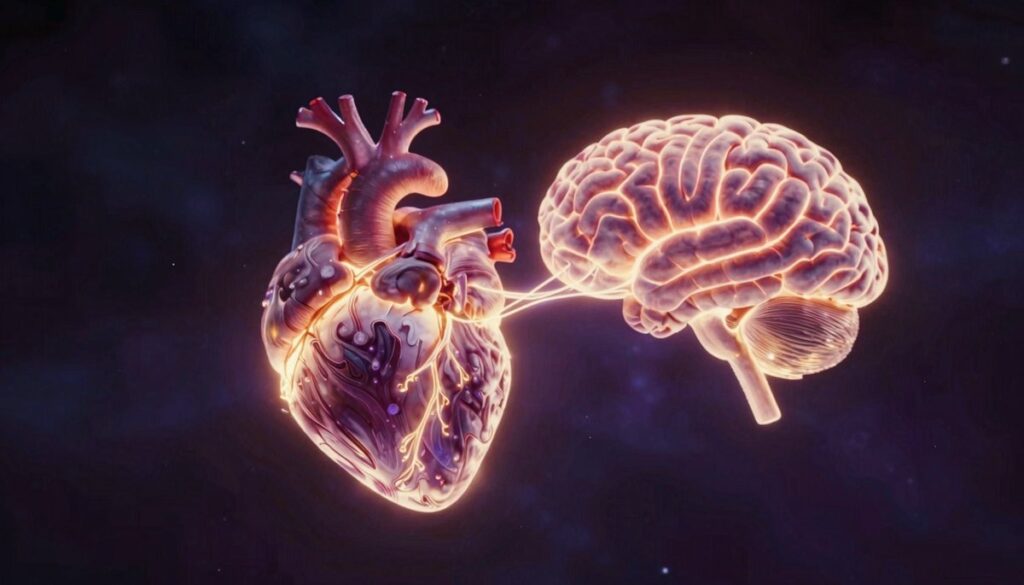
The eternal debate between heart and logic has guided human decision-making for millennia. When faced with a critical choice, should you trust the rational analysis of your mind or the intuitive pull of your heart? Understanding which voice is more honest requires examining both the science of cognition and the wisdom of embodied intuition. This article explores the heart vs logic dynamic to help you make more aligned, authentic decisions in every area of your life.
The Neuroscience of Heart vs Logic Decision Making
Modern neuroscience reveals that heart vs logic is not a simple binary. The heart actually contains its own neural network with approximately 40,000 neurons, forming a complex sensory system that communicates with the brain. Research from the HeartMath Institute demonstrates that the heart sends more information to the brain than the brain sends to the heart. This means your heart is not just a metaphorical guide but a sophisticated processing system. When you feel a gut feeling or heart sense, it is actually your body integrating vast amounts of data faster than conscious reasoning can achieve. However, emotions can also be reactive and fear-based, which is why the heart vs logic debate requires nuance.
When Logic Leads You Astray
Logic seems reliable because it follows clear rules and measurable outcomes. But rational analysis has significant limitations. Analysis paralysis, where overthinking prevents any decision, is a common logic trap. Additionally, logic operates within the boundaries of what you currently know, which means it cannot account for unknown variables or future changes. Many people who pride themselves on logical decision-making end up stuck, unable to commit because their analysis never feels complete. Pure logic also ignores the emotional data that signals alignment with your values, often leading to decisions that look right on paper but feel deeply wrong in practice.
When the Heart Leads You Astray
The heart, while powerful, is not infallible either. Emotional decisions made in the heat of the moment can be driven by fear, trauma, or unhealed wounds rather than genuine intuition. The heart can also be influenced by attachment, desire, and wishful thinking, leading you toward choices that feel right in the moment but create problems later. The key distinction in the heart vs logic debate is between reactive emotion and deep intuition. Reactive emotion is impulsive and short-lived, while deep intuition is calm, clear, and persistent. Learning to tell the difference is essential for authentic decision-making.
Integrating Heart and Logic for Optimal Decisions
The most effective decision-makers do not choose between heart and logic. They integrate both. This approach, sometimes called heart-brain coherence, combines the analytical power of reason with the holistic wisdom of intuition. When heart and logic align, decisions feel both smart and right. Here is a practical framework for achieving this integration in your own life.
- Start with Logic: Gather relevant information, list pros and cons, and identify your options. Use reason to establish the boundaries of your decision.
- Check with Your Heart: For each option, notice your body. Does it create expansion or contraction? Does it feel heavy or light? Your body knows before your mind.
- Seek Coherence: The best decision is one where logic and heart agree. If they conflict, pause and explore why before proceeding.
- Test with Small Steps: Before committing fully, take a small action in your chosen direction and observe how it feels.
- Review and Adjust: After making the decision, review the outcome. Did it align with both your rational analysis and your intuitive sense?
The Role of Embodied Intelligence
Beyond the heart vs logic debate lies a deeper concept: embodied intelligence. Your entire body processes information and communicates guidance through sensations, tension, temperature, and movement. People who are highly attuned to their bodies often make better decisions because they access a wider data stream than conscious awareness provides. Practices like meditation, breathwork, and body scanning enhance this embodied intelligence, making it easier to distinguish between fear-based reactions and genuine intuitive guidance. When you develop trust in your whole-body wisdom, the heart vs logic debate becomes less relevant because you are drawing from both simultaneously.
| Decision Type | Best Approach | Why |
|---|---|---|
| Financial | Logic first, heart check | Numbers need analysis; values need alignment |
| Relationships | Heart first, logic support | Connection requires emotional truth |
| Career | Both equally | Practical needs meet purpose alignment |
| Health | Heart (body signals) first | Body knows what it needs |
“The heart has its reasons which reason knows nothing of.” — Blaise Pascal
Discussion Points on Heart vs Logic
- Cultural Bias Toward Logic: How Western education systems privilege rational thought over intuitive intelligence and the cost of this imbalance.
- Gender and Decision Making: Examining stereotypes about emotional women and logical men, and how these limit everyone.
- Trauma and Intuition: How past trauma can distort heart signals and what healing looks like for reliable inner guidance.
- Meditation and Clarity: Research showing how regular meditation improves the quality of both logical and intuitive decision-making.
- Business Applications: How successful leaders describe using both data and gut instinct in high-stakes decisions.
Conclusion: Your Integrated Voice Is the Most Honest
In the heart vs logic debate, the winner is integration. Neither voice alone is as wise as both working together. Your logic provides structure and analysis. Your heart provides meaning and alignment. When you learn to listen to both, honoring what each offers, you make decisions that are not only smart but also deeply right for who you are. The most honest voice is not your heart or your mind alone. It is the coherent signal that emerges when both are in dialogue. Explore more about authentic decision-making at ixplife.com.
FAQ: Heart vs Logic Decision Making
Can I trust my heart if I have made bad emotional decisions before?
Yes, but with discernment. Past bad decisions often came from reactive emotion rather than deep intuition. With practice and self-awareness, you can learn to distinguish between the two and rebuild trust in your inner guidance.
How do I know if a gut feeling is intuition or fear?
Intuition tends to be calm, clear, and persistent. Fear tends to be urgent, repetitive, and accompanied by physical tension. Practice noticing the difference through journaling and body awareness exercises.
Is it possible to be too logical?
Yes. Excessive rationality can lead to analysis paralysis, emotional disconnection, and decisions that ignore important human factors. Balance is essential for wise decision-making.
What practices improve heart-brain coherence?
Meditation, breathwork, gratitude journaling, and spending time in nature all improve the integration of heart and mind. Even five minutes of coherent breathing daily can enhance your decision-making quality.
Should children be taught to follow their heart or their head?
Children benefit from learning both. Teaching them to think critically while also honoring their feelings creates adults who can integrate both capacities effectively.
Trust your integrated voice. Visit IXPLife.com for more wisdom on balancing intuition and reason in daily life.